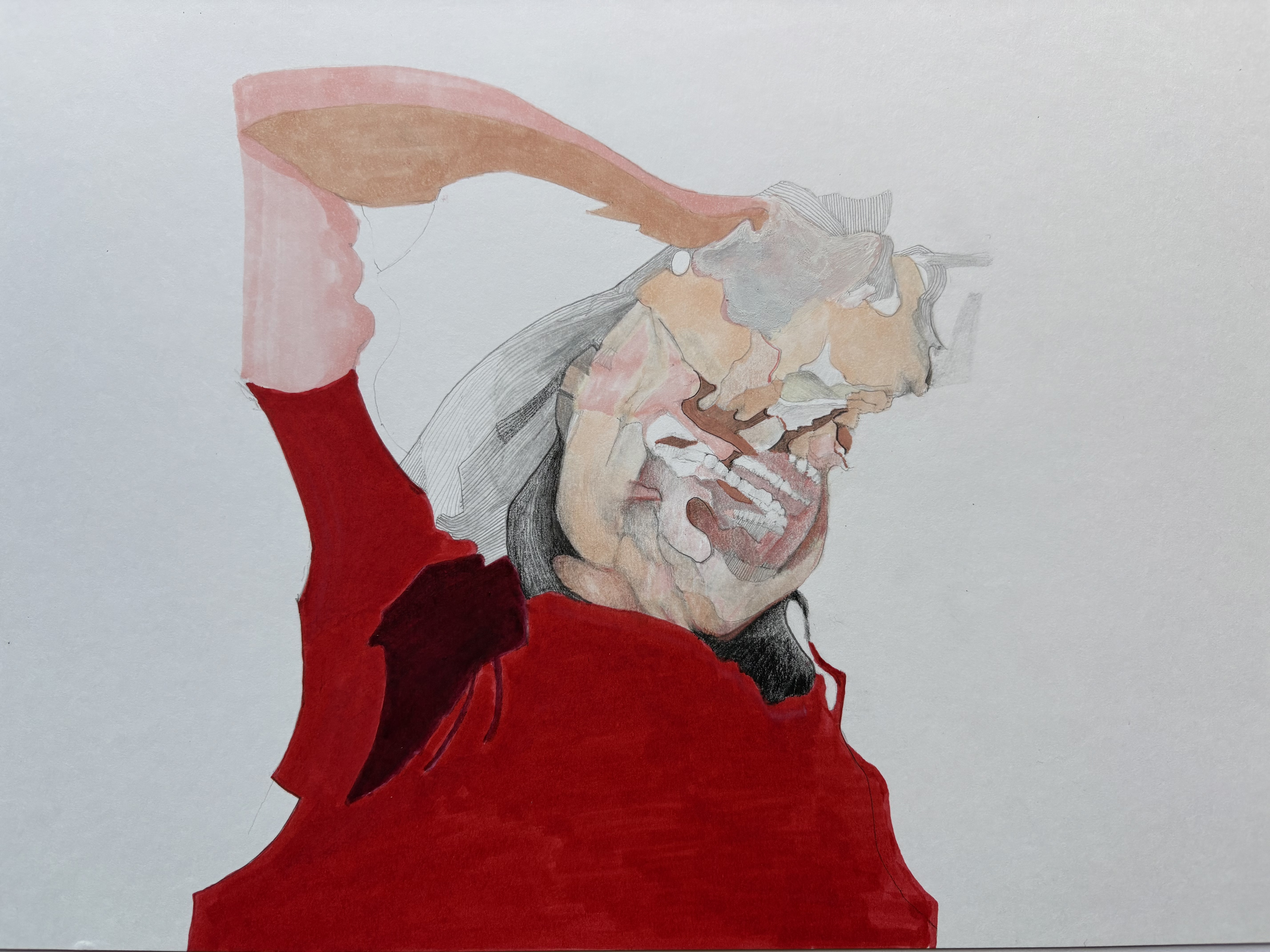
Imaginative Resistance (under contract with Oxford University Press) is the first comprehensive book-length study of the phenomenon known as imaginative resistance. The phenomenon refers to psychological difficulties that otherwise competent imaginers experience when they engage in particular imaginative activities prompted by works of fiction.
When reading novels or watching movies, we are ready to imagine even the most peculiar scenarios, such as playing cards planting roses, a traveling salesperson transforming into a giant insect, or Californians being replaced by emotionless duplicates grown like plants in pods. However, there are also instances where we fail or refuse to engage in imaginative activities, such as when we are asked to imagine that dormant pedophiles are the most virtuous in Nymphomaniac Vol II, or that global genocide against non-whites is morally justifiable in The Turner Diaries.
The imaginative resistance debate came about as an attempt to unpack what is going on in these special, puzzling cases. Since the debate was ignited by Richard Moran and Kendall Walton thirty years ago, significant progress has been made in understanding the phenomenon and exploring its complexity. As with any rapidly growing area of research, however, there has been much disagreement and confusion among scholars as to the precise nature of imaginative resistance. Indeed, scholars disagree on
- whether imaginative resistance is a real phenomenon;
- whether it is genuinely puzzling;
- whether it is puzzling for multiple reasons, and if so, whether these reasons are reducible to others;
- whether resistance occurs only in response to moral deviations or also to other types of contradictions;
- whether the resistance stems from the subject’s inability to engage in the prompted activity or the subject’s unwillingness to do so.
In my book, I identify sources of confusion around this phenomenon to resolve some of these apparent conflicts. Furthermore, I draw insights from my analysis of this relatively insulated phenomenon for broader, hard-to-pin-down issues, such as the ethics-aesthetics relation, the nature of fiction and imagination, the effects of racist, sexist, and homophobic biases on our engagement with fictional works, and how imagination relates to belief and other states.
Existing explanations fall into two camps: “Cantianism,” which claims we resist because we can’t imagine certain scenarios, and “Wontianism,” which claims resistance occurs because we won’t imagine them. Both accounts explain some aspects of imaginative resistance but fail to cover the full range of cases. Cantianism accounts for a broad range of resistance triggers: not only moral deviations but counter-descriptive claims, such as the statement “the five-fingered maple leaf that Sally is holding is oval,” can trigger resistance. Wontians partially capture why there is inter- and intra-personal variation in our responses: not all of us resist the prompted imaginings in the same way and with the same force, and depending on the work, sometimes even the same person can react to the same type of deviation with varying degrees of resistance. The apparent incompatibility between Cantianism and Wontianism makes it hard to develop a comprehensive theory that can explain all aspects of the resistance phenomenon. I argue that a hybrid account, incorporating the benefits of Cantianism and Wontianism, is a viable possibility.
My argument has three key steps:
Emotional Influence: The analysis of imaginative resistance, using the distinction between selective and panoramic imagining, reveals that the phenomenon is more complex than previously thought. Merely reconciling Cantianism and Wontianism is insufficient to capture all aspects of the phenomenon. To gain a comprehensive understanding, an additional explanation is needed to understand why we sometimes experience imaginative resistance as an unwillingness and at other times as an impossibility to selectively imagine both moral and non-moral deviations. Drawing on recent psychological research, I propose that emotions, such as disgust and contempt, shape our resistance to these types of selective imagining. These emotions amplify our disapproval, leading to a spectrum of reactions. Overall, our resistance can range from “I won’t imagine” to “I can’t imagine,” depending on the type of imagining we engage in (selective or panoramic imagining) and our specific psychologies (how much we care about prescribed violations by the deviant content and the emotional reaction these violations trigger).
Historical Investigation: I examine Kantian and Humean approaches to morally flawed works and show how these differing accounts challenge the dichotomy between Cantianism and Wontianism. Both suggest that our resistance reactions can vary: sometimes we resist imagining counter-evaluative claims due to unwillingness, and other times due to inability. This analysis also fills a crucial gap in the literature, as historical treatments of imaginative resistance have not been previously studied in depth.
Reconciling Cantianism and Wontianism: I argue that Cantians and Wontians mistakenly treat imaginative resistance as a unified phenomenon because they assume propositional imagining—imagining that p is the case—is uniform. However, propositional imagining is not uniform, and therefore Cantianism and Wontianism do not explain the same unified phenomenon. I introduce a distinction between two modes of imagining: selective and panoramic, and reinterpret the Cantian and Wontian positions based on this distinction. On my interpretation, Cantianism attributes resistance to an inability to panoramically imagine deviations, which involves the comprehensive imagining of all apprehended propositions within the fiction and ensuring global consistency, much like how we form beliefs. Wontianism, in contrast, links resistance to an unwillingness to selectively imagine deviations, which involves focusing on local coherence without the need for global consistency. Since these two theories address different aspects of imaginative resistance, they are not only compatible but also complementary.
 Emine Hande TUNA